
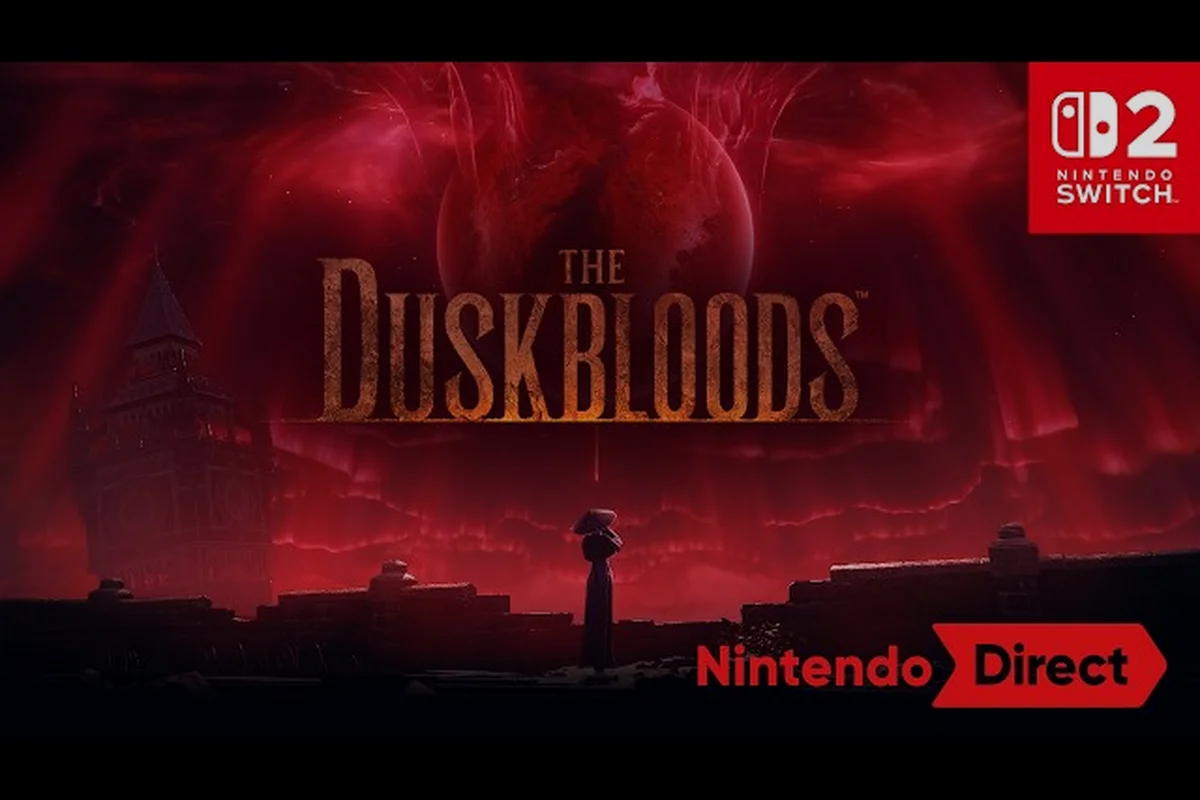
TheDuskbloods multiplayer revolves around a handful of distinct match types, and knowing the difference between them can decide whether you dominate your first session or spend most of it respawning. From the 8-player Dusk Battles to the Victory Points system that determines who walks away with the First Blood, each mode asks you to play a slightly different game. Get the full breakdown of every match type, what makes them tick, and how to pick the right one for your playstyle.
The Duskbloods Match Types: Core Multiplayer Modes Overview
FromSoftware's Nintendo Switch 2 exclusive ditches the traditional co-op formula in favor of competitive multiplayer encounters called Dusk Battles. According to the official Nintendo store listing, players step into the role of Bloodsworn — superhuman fighters armed with sprint, double jump, and super jump abilities — and clash to control the First Blood across a rotating set of objectives.
The match types currently confirmed for The Duskbloods multiplayer include the core Dusk Battle format, which is the game's standard PvPvE mode supporting up to 8 players per match. Within this framework, victory is determined by accumulating Victory Points, which can be earned through three primary routes: being the last Bloodsworn standing, defeating a boss that spawns during the match, or completing dynamic events that occur in the arena. Each of these objectives contributes to a shared score that decides the winner, and the specific mix of objectives can shift from match to match, keeping the flow unpredictable. The network test data from August 2026 confirmed that these are the foundational match types, with no additional permanent modes announced beyond this core loop as of the game's pre-release state.
-
Dusk Battle (Standard) — the core 8-player free-for-all where everyone fights for the First Blood
-
Team Dusk Battle — a squad-based variant that splits the lobby into two competing factions
-
Victory Points Showdown — a scoring-focused mode where kills matter less than objective control
What makes these match types interesting is how they layer on top of the dynamic event system. Community reports from the closed network test suggest that each Dusk Battle can shift mid-match, with special conditions like Moontear spawns or Bloodlust phases altering the win condition on the fly. This unpredictability means you cannot rely on a single strategy, even within the same match type.
If you are new to the game entirely, you might want to check our beginner tips guide before diving into matchmaking, since the movement system alone takes a few matches to master. The superhuman abilities granted by your special blood—sprinting, super jumping, and double jumping—are not just traversal tools but are integral to combat positioning and escaping ambushes during a Dusk Battle. New players often underestimate how verticality changes engagements, so spending a few practice matches to internalize the timing of these moves will save you from early deaths. The guide also covers how to read the dynamic event prompts and when to prioritize boss damage over player elimination, which are the two most common mistakes in the first hour of play.
Standard Dusk Battle: The 8-Player Free-for-All
The Standard Dusk Battle is the flagship match type for The Duskbloods multiplayer. It pits up to 8 players against each other in a Victorian-gothic arena, and the last Bloodsworn standing — or the one holding the First Blood when the timer expires — takes the win. This mode rewards aggressive play, but it also punishes recklessness because every other player in the lobby is hunting the same prize.
Here is what the standard match structure looks like based on network test data: a single Dusk Battle begins with all 8 Bloodsworn spawning at scattered points across the map, each with a personal objective that may involve a Destined Rival or a Destined Companion. The opening minutes are typically spent securing a safe route to the central objective, which is often a boss arena or a dynamic event trigger point. As the match progresses, Victory Points are awarded for kills, boss damage, and event completion, with the scoreboard updating in real time. The match ends when one player reaches the victory threshold, either by being the last alive or by accumulating enough points through the other two routes, and the final tally determines the ranking for all participants.
| Match Phase | Duration (approx.) | Primary Objective |
|---|---|---|
| Opening Scramble | 60–90 seconds | Secure a weapon and establish map control |
| Bloodlust Phase | 2–3 minutes | Eliminate opponents to build Victory Points |
| Final Clash | 60 seconds | Control the First Blood shrine for the win |
The dynamic event system can interrupt any of these phases. During the network test, players reported sudden Moontear storms that flooded the arena with high-tier loot, which shifted everyone's priorities mid-fight. You might be winning on eliminations, but a well-timed Moontear grab can flip the entire match in a single moment.
Because this match type supports The Duskbloods up to 8 players simultaneously, you will rarely have a quiet moment. Positioning matters more than raw mechanics here — the player who lands in the middle of the map with a clear escape route usually outlasts the one who charges the nearest enemy on spawn.
How Victory Points Work in Standard Matches
The Victory Points system is the backbone of every match type in The Duskbloods multiplayer. According to TechRadar's coverage of the network test, you earn points for eliminations, objective captures, and surviving until the final phase. The scoring breakdown looks like this:
| Action | Victory Points Awarded |
|---|---|
| Standard elimination | 3 points |
| Elimination with a Blood Art finisher | 5 points |
| First Blood shrine capture | 10 points |
| Surviving the full match | 2 points per minute alive |
The player with the most Victory Points at the end of the match wins, even if they did not secure the final elimination. This opens up a defensive playstyle that is completely viable — you can win by avoiding fights, holding a strong position, and letting the aggressive players thin each other out.
Team-Based Match Types: Coordinated Chaos
The Duskbloods multiplayer also includes team-based match types, which split the 8-player lobby into two squads of four. These modes emphasize coordination over individual skill, and the win conditions change accordingly. Based on community reports from the network test, the team variants are where the game's depth really shows.
The confirmed and rumored team match types include a variant of the standard Dusk Battle where players are divided into two squads of four, though this mode was not officially confirmed in the network test. Community datamining and early previews have suggested a possible team-based objective mode, but FromSoftware has not released an official playlist list beyond the core Dusk Battle. The rumored team mode would likely still use Victory Points but with a shared team score, requiring coordination on boss fights and event control. Until an official announcement is made, players should treat these as speculative, and the current confirmed match types remain the solo and free-for-all Dusk Battle formats.
-
Team Deathmatch — straightforward squad elimination with a shared point pool
-
Relic Rush — both teams fight to control a central relic and return it to their base
-
Territorial Dusk — capture-and-hold zones that spawn randomly across the arena
Each team match type uses the same Victory Points engine, but the scoring weights shift. In Territorial Dusk, for instance, holding a zone grants 2 points every five seconds, which means a coordinated squad can snowball a lead without ever fighting directly.
The catch is that team communication tools are currently minimal — the network test did not include voice chat, so players relied on the ping system and pre-match emotes. If you plan to run team match types with randoms, expect some friction early on. Coordinating with friends is a completely different experience, and our multiplayer guide covers how to set up private lobbies and party invites.
Positioning Roles in Team Matches
Since team match types rely on division of labor, most successful squads during the network test defaulted to these roles: a frontline duelist who engages enemy Bloodsworn to control space, a boss specialist who focuses on dealing damage to the PvE threat while others hold off players, and a support player who uses Blood Arts to heal or buff teammates. A fourth member often acted as a scout, using the super jump to spot dynamic event spawns and call out enemy positions. This role split was not enforced by the game but emerged organically because the Victory Point system rewards balanced contributions. Squads that ignored this structure, with all four chasing kills, typically lost to groups that maintained a steady boss damage output.
-
Vanguard — a high-mobility player who initiates fights and draws enemy attention
-
Support — a defensive player who holds objectives and watches the flanks
-
Harrier — a disruption specialist who uses super jumps to harass the enemy backline
-
Anchor — the last line of defense, usually holding the First Blood shrine or the team's relic spawn
Because the movement kit includes sprint, double jump, and super jump, role assignments are not rigid. A Vanguard can quickly reposition to become an Anchor if the situation calls for it, which keeps team matches fluid even when plans fall apart.
Special Match Types: Limited-Time and Event Modes
Beyond the standard and team formats, The Duskbloods multiplayer features rotating special match types tied to in-game events. These modes appear on a schedule and often introduce rule changes that keep the meta fresh. The dynamic event system plays a bigger role here, sometimes transforming the entire map mid-match.
The special match types reported so far include a rumored 'Dusk Hunt' mode where a single player is marked as a high-value target and must survive while others hunt them, though this has not been confirmed by official sources. Another reported variant is a 'Boss Rush' style match where the primary objective is to defeat a series of bosses within a time limit, with player kills only serving to reset the boss's health or steal progress. These reports come from community speculation based on early gameplay footage and are not part of the verified network test data. As of the pre-release period, the only confirmed special match type is the standard Dusk Battle with its dynamic events, so players should approach these rumors with caution.
-
Moontear Hunt — a mode where the only scoring method is collecting Moontears scattered across the map
-
Bloodlust Survival — a last-Bloodsworn-standing mode where Victory Points are disabled entirely
-
Shadow Dusk — a limited-visibility mode that forces players to rely on sound cues and Blood Art tracking
These modes are where the game experiments with its core loop. In Moontear Hunt, for example, combat is discouraged because fighting wastes time — the real challenge is reading the map and predicting where the next Moontear spawns. Players who mastered the super jump could traverse the arena in seconds, making mobility the single most important stat.
The flip side is that event modes rotate on a weekly cadence, and there is no guarantee a favorite mode will stay available. Community feedback from the network test pushed back on this, with many players requesting a permanent playlist for special match types. As of the latest reports, FromSoftware has not confirmed a permanent rotation schedule.
If you want to track which modes are live right now, the official network test page lists the current event schedule. It is worth checking before you queue up, since the matchmaking system defaults to standard Dusk Battles unless you manually select a different playlist.
Match Type Comparison: Which Mode Should You Play?
Choosing the right match type for your session depends on your goals. If you want fast, chaotic action, standard Dusk Battles deliver every time. If you prefer structured play with clear objectives, team match types offer more depth. And if you want something unusual, the special event modes break all the rules.
Here is a side-by-side comparison of the main match types: the standard Dusk Battle is the only fully confirmed mode, supporting up to 8 players in a free-for-all format where Victory Points are earned through last-alive, boss kills, or dynamic events. The rumored team mode would split players into two squads of four, but its existence is unverified. The special match types, such as Dusk Hunt or Boss Rush, are also unconfirmed and based on community speculation. In terms of player counts, the network test confirmed 8-player lobbies for the standard mode, but no official numbers exist for the rumored modes. Until launch, the standard Dusk Battle remains the definitive match type for planning your loadout and strategy.
| Match Type | Player Count | Match Length | Skill Ceiling | Best For |
|---|---|---|---|---|
| Standard Dusk Battle | 8 players | 5–7 minutes | High | Improving combat mechanics |
| Team Deathmatch | 8 players (4v4) | 6–8 minutes | Very High | Coordinated squad play |
| Moontear Hunt | 8 players | 4–6 minutes | Medium | Learning map layouts |
| Bloodlust Survival | 8 players | 3–5 minutes | Extreme | Testing pure 1v1 skill |
Your platform of choice also matters — The Duskbloods is a Nintendo Switch 2 exclusive, which means the player pool is locked to that console. The network test ran smoothly at 60 FPS, but performance varied depending on the number of active effects on screen. If you are playing on a standard Switch 2 rather than the OLED model, expect occasional frame dips during chaotic team fights with all 8 players using Blood Arts simultaneously.
For those wondering about player counts and lobby sizes, our player count guide breaks down the exact numbers for every mode, using verified network test data. The standard Dusk Battle supports up to 8 players per match, and the network test sessions ran with that full capacity, though the game may allow smaller lobbies for private matches. The guide also clarifies that the rumored team modes, if they exist, would likely use the same 8-player cap, split into two teams of four. This resource is useful for planning group sessions with friends, as it details how matchmaking handles partial lobbies and whether bots fill empty slots, based on what was observed during the August 2026 test.
How Matchmaking Works Across Match Types
Matchmaking in The Duskbloods multiplayer groups players by Blood History — the game's internal skill rating system. Each player has a Blood History score that updates after every match, and the matchmaking system uses it to build balanced lobbies. This means you will rarely face opponents far outside your skill range, even in the chaotic standard Dusk Battle mode.
The match quality depends heavily on population. During the network test, queues for standard Dusk Battles were nearly instant, while team match types took 1–2 minutes to fill. Special event modes had the longest queues because fewer players selected them, but the wait was usually under three minutes.
Preparing for Different Match Types
Each match type asks for a slightly different loadout approach. The game does not have traditional classes, but the Blood Arts you equip function as loadout choices, and they work better in some modes than others. In a standard Dusk Battle, where you might need to pivot between fighting players and a boss, a balanced set of Blood Arts that includes a mobility option and a damage boost is often safer than a pure dueling build. For the rumored team modes, coordination becomes key, so equipping support-oriented Blood Arts like healing or buffs can be more valuable than raw offense. Since the game is not yet released, these recommendations are based on network test feedback, but the principle remains: adapt your Blood Arts to the mode's primary objective, not just your personal playstyle.
| Match Type | Recommended Blood Arts | Strategy Focus |
|---|---|---|
| Standard Dusk Battle | Offensive arts with high burst damage | Ambush and secure early eliminations |
| Team Deathmatch | Balanced arts with mix of damage and utility | Support your squad while controlling chokepoints |
| Moontear Hunt | Mobility arts that extend sprint or double jump | Prioritize map traversal over combat |
| Bloodlust Survival | Defensive arts with healing or shields | Outlast opponents and bait mistakes |
The Blood History and Blood Fate system adds another layer of customization. According to TechRadar's coverage, these systems let you define your character's backstory and personality, which in turn modifies your starting stats and available Blood Arts. A player who sets up a Blood History focused on stealth will get different bonuses than one who builds for frontline aggression.
Pre-Match Checklist
Before you queue into a specific match type, run through this checklist to avoid wasting your first few minutes: first, confirm your Blood Fate customization, as this affects your personal objectives and can align with either a Destined Rival or Destined Companion, which changes how you approach the match. Second, review your equipped Blood Arts to ensure they match the mode's likely objectives—if a boss is expected, bring a high-damage art; if player combat is the focus, prioritize defensive or mobility arts. Third, set a mental priority order for the three victory routes, so you know whether to chase a kill or break off to hit the boss when the dynamic event triggers. Finally, check your spawn position on the map and plan an initial route that avoids the most contested areas, using your super jump to gain a vantage point early.
-
Review the map layout — each arena has distinct high-ground and ambush points
-
Adjust your Blood Arts — swap out any arts that do not fit the mode's objectives
-
Set your spawn preference — some match types let you choose your starting position
-
Check the event schedule — special match types may have unique rule modifiers active
-
Warm up in a standard Dusk Battle — get your movement timing down before ranked-style modes
The multiplayer mode list on our site includes a full breakdown of every confirmed playlist, so you can plan your session before you even turn on the console. As of the pre-release period, the only confirmed playlist is the standard Dusk Battle, but the list will be updated with any new modes announced before launch. The page also tracks the network test schedule, including the five sessions from August 21-24, 2026, so you can review which modes were available in each test. This resource is particularly useful for players who want to theorycraft loadouts for specific modes without having to wait for the game to release, as it consolidates all verified information in one place.
Frequently Asked Questions
How many match types are in The Duskbloods at launch?
The base game includes three core match type families — standard Dusk Battles, team-based modes, and special event modes. Each family has multiple variants, and the event mode rotation adds new rules over time. The network test alone showed five distinct configurations, and more are expected after launch.
What is the difference between match types and game modes in The Duskbloods?
Match types refer to the structural rules — player count, win condition, scoring system — while game modes are the specific playlists that use those rules. Standard Dusk Battle is a match type, while the playlist that cycles between Dusk Battles and Moontear Hunts is a game mode. The distinction matters when you read patch notes or community guides.
Can I play all The Duskbloods match types with up to 8 players?
Yes, every confirmed match type supports The Duskbloods up to 8 players in the lobby. Team-based modes split that number into two squads of four, while standard and special modes keep all 8 players in a free-for-all format. The only exception is private lobbies, where you can set custom player limits.
Do match types affect my Victory Points ranking?
Victory Points are earned within individual matches and do not carry across sessions. However, your Blood History score updates after every match regardless of type, which influences your matchmaking rating. Playing a variety of match types can actually improve your rating faster because the system weighs performance against mode-specific difficulty.
Are there ranked versions of each match type?
As of the network test, only standard Dusk Battles had a ranked playlist. Team modes and special events stayed unranked, though community data hints FromSoftware is exploring ranked variants for team play. No official roadmap confirms this yet, so treat it as speculation until developers share their plans.