
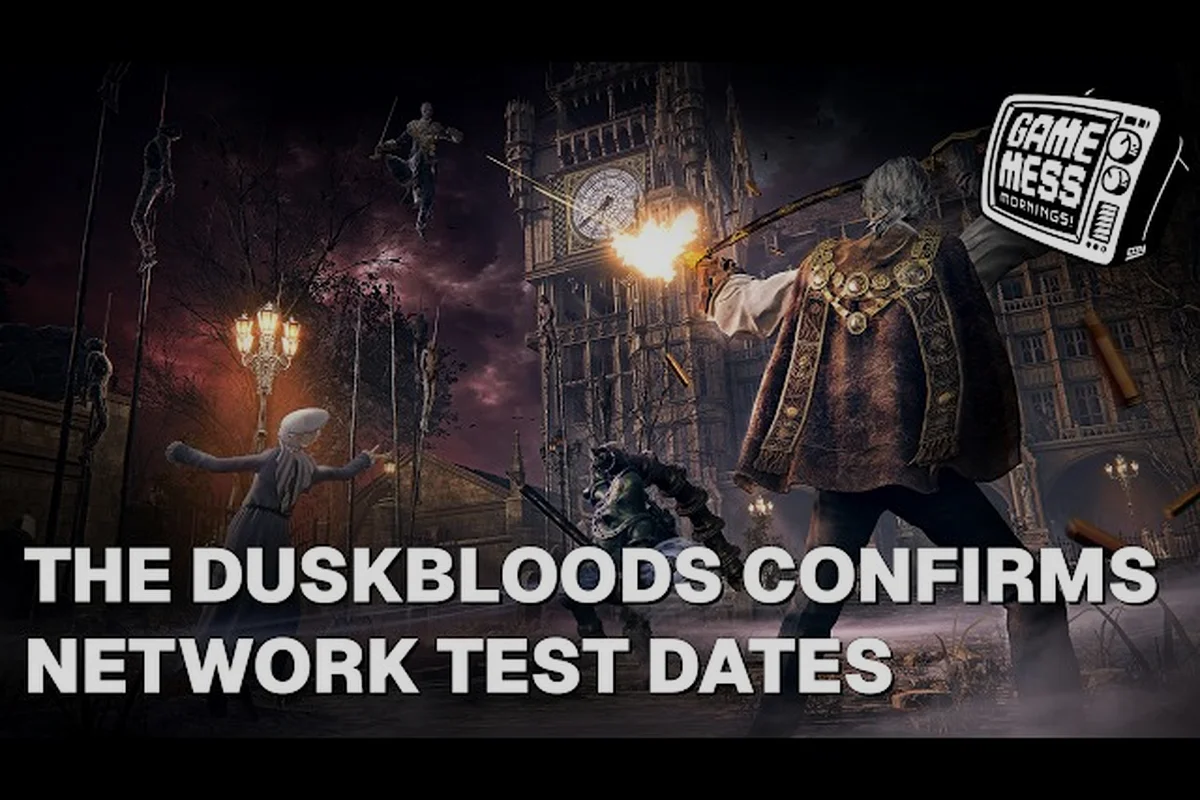
The Duskbloods online battles pit you against seven other Bloodsworn in a gothic Victorian arena where every match escalates toward one brutal conclusion. Since FromSoftware's Switch 2 exclusive launches with an 8-player PvPvE format, understanding the flow of these Dusk Battles is the difference between drifting through rounds and consistently controlling the First Blood objective. If you want to queue with friends instead of solo, you'll also need to know exactly how the party system works before launch day.
According to the official Nintendo product page for The Duskbloods, these online battles pit players against one another in a high-stakes, last-blood-remaining format where survival hinges on precise timing and resource management.
Understanding the Core Structure of The Duskbloods Online Battles
Every Dusk Battle in The Duskbloods online battles drops eight players into a shared map where they sprint, double jump, and super jump across rooftops while hunting for the objective. According to the official Nintendo product page, players fight to control the First Blood across each match, which spawns dynamic events that shift the flow of combat dramatically. The match isn't simply about eliminating everyone else, because the win condition revolves around accumulating Victory Points before the timer expires.
What makes this format distinct from a traditional battle royale is the layered scoring system. You earn points through PvE kills, PvP eliminations, and objective captures, but the player holding First Blood becomes a beacon for the entire lobby. That tension creates the signature moments of the game, because you're constantly weighing whether to chase the leader or fortify your own position.
| Match Element | How It Works | Strategic Impact |
|---|---|---|
| Player Count | 8 players per Dusk Battle | Keeps engagements frequent but readable |
| First Blood | Dynamic objective that spawns mid-match | Forces map-wide rotations and risk assessment |
| Victory Points | Primary scoring currency | Determines placement, not just kills |
| Last One Standing | Tiebreaker condition when points are close | Rewards aggressive endgame play |
| Blood History | Persistent customization tracker | Ties short-term matches to long-term progression |
The final bell doesn't always crown the deadliest fighter, because a player who farms PvE enemies while avoiding combat can outscore a duelist with twice as many eliminations. That nuance matters when you're planning your approach with a squad, since coordinating who hunts objectives and who hunts players creates a much stronger strategy than everyone chasing the same target. For a deeper breakdown of how the scoring flows behind the scenes, our PvPvE mechanics guide covers the point economy in detail.
How Victory Points Shape the Last One Standing Rule
The last one standing mechanic only fully activates when players are tied on Victory Points as the match clock approaches zero. In those moments, the game prioritizes survival, so the final Bloodsworn alive claims the round even if they were trailing on score. Community reports from the network test indicate these tiebreaker scenarios happened more often than expected, because the dynamic event spawns create natural convergence points where skirmishes erupt.
This system rewards positioning as much as aim. If you're leading on points but low on health, your best play is often to disengage and force the remaining players to fight each other, because their eliminations won't close the gap fast enough. Players who understand this timing can farm PvE enemies safely while the rest of the lobby bleeds each other dry, which feels counterintuitive but produces consistent top placements.
How to Invite Friends to The Duskbloods Online Battles
The party system for The Duskbloods online battles uses a straightforward lobby-based invite flow, although the exact interface hasn't been fully shown in official footage. Based on the network test build and standard Nintendo Switch 2 integration, you'll likely access the Friends List from the Hub area before matchmaking. From there, you can send invites to players on your Nintendo account, and they'll receive a notification that lets them drop into your pre-game lobby.
If you're wondering about crossplay, the official materials don't confirm any platform crossover, so your friend group will all need Switch 2 consoles plus a Nintendo Switch Online membership. The game runs entirely through Nintendo's online infrastructure, which means the same subscription that powers Splatoon and Mario Kart also gates access to Dusk Battles. For a complete rundown of what the online modes require, check our online multiplayer overview that breaks down every connectivity detail.
| Invite Method | How It Works | Best Use Case |
|---|---|---|
| In-Lobby Invite | Send from your pre-match lobby | Quick fill before queuing |
| Nintendo Friend Code | Add via Switch 2 friend system | Playing with real-life friends |
| Recent Players | Invite from match history | Building rapport with strong randoms |
| Voice Chat Party | Coordinate via Switch 2 party features | Full squad communication |
| Spectator Invite | Watch a live match before joining | Learning map layouts safely |
The lobby itself supports up to eight players, so you can fill an entire Dusk Battle with friends if you coordinate properly. That said, party matchmaking will likely place your group against other squads or partial squads rather than eight solo players, because the system tries to balance team compositions. Expect sweaty lobbies when you queue as a full group, since the game's internal MMR accounts for coordination advantages.
Setting Up Your Squad for Dusk Battles
When you're building a full party, think about role coverage rather than stacking your favorite characters. A squad with one aggressive duelist, one objective-focused hunter, and one support player who can secure First Blood creates far more pressure than three players all chasing kills.
-
Assign a point leader who calls rotations when First Blood spawns
-
Designate a PVE farmer who clears enemy camps while others contest objectives
-
Keep one flex player ready to peel off and reinforce whichever fight needs numbers
-
Rotate who holds the First Blood objective so no single player becomes a target
-
Share Victory Point updates after every engagement so the squad knows when to push or retreat
During the network test, players reported that coordinated squads who communicated spawn timers consistently outscored teams that individually hunted. That's because the dynamic events spawn in predictable locations after set intervals, so a disciplined team can pre-position before the objective even appears.
Is Duskbloods Switch Online Required for Every Mode?
The short answer is yes — Duskbloods Switch Online required applies to every multiplayer mode in the game. Since The Duskbloods online battles are the core experience, you cannot access Dusk Battles without an active Nintendo Switch Online subscription. The game has no offline versus mode or local split-screen option, so the subscription is non-negotiable if you want to play at all.
That said, the Hub area and customization systems like Blood History and Blood Fate might function offline, because they're tied to your personal progression rather than server-sided matchmaking. However, the actual Dusk Battles themselves need the subscription, and players who let their membership lapse will find themselves locked out of the main loop entirely.
| Subscription Tier | Dusk Battles Access | Notes |
|---|---|---|
| No Membership | Locked | Cannot queue for any multiplayer mode |
| Nintendo Switch Online | Full Access | Includes all Dusk Battle modes |
| Expansion Pack | Full Access | Adds N64/Genesis titles, no gameplay bonus |
| Free Trial | Temporary Access | Limited to 7 days, then requires payment |
| Family Plan | Full Access | Covers up to 8 accounts on one subscription |
Nintendo's official store page confirms the multiplayer action with up to 8 players, and the requirement mirrors other online-focused Switch titles. If you're planning to play long-term, the individual 12-month membership offers the best value, because monthly rates add up quickly. Families or friend groups with multiple Switch 2 consoles should split a family plan instead of buying separate subscriptions.
What the Network Test Taught Us About Server Stability
The closed network test in July 2026 gave FromSoftware a chance to stress-test their servers under real-world conditions, and community reports suggest the infrastructure held up reasonably well. Players experienced occasional connection drops during peak hours, but matchmaking times stayed under two minutes for most regions. The test also revealed that the game uses dedicated servers rather than peer-to-peer hosting, which explains why lag spikes were rare even in chaotic 8-player fights.
One notable finding from the test was that region locking appeared to be in effect, since players in Japan matched faster with each other than with international players. That's a good sign for competitive integrity, because it reduces the ping disparity that plagues global matchmaking. For more details on what the test revealed about the final product, our network test guide has the full breakdown of server behavior and player feedback.
Building Your Strategy for the Duskbloods Competitive Scene
The competitive scene for The Duskbloods online battles is still forming, but early tournament organizers are already discussing how to structure events around the 8-player format. Because matches involve both PvP and PvE elements, competitive play demands a different skillset than traditional fighting games or shooters. You need mechanical execution for duels, but you also need macro awareness for tracking Victory Point differentials and knowing when to disengage.
Ranked modes haven't been officially confirmed, but the network test included a match quality rating that affected who you queued against. Players who consistently finished top three saw tougher lobbies within a few matches, which suggests a hidden MMR system is already in place. That's encouraging for the competitive scene because it means the matchmaking will feel fair rather than chaotic.
| Competitive Skill | Why It Matters | How to Train It |
|---|---|---|
| Movement Mastery | Double jumps create escape options | Practice super jump timing in Hub |
| Objective Discipline | Knowing when to chase First Blood | Study spawn patterns in customs |
| PVE Efficiency | Farming points without taking damage | Learn enemy attack animations |
| Duel Confidence | Winning fights when contested | Play aggressive in warm-up matches |
| Rotational Awareness | Reading where fights will erupt | Watch kill feed and track positions |
If you're serious about competing, start recording your matches and reviewing your decision-making under pressure. The difference between a top-tier player and an average one often comes down to whether they greed for extra points or secure their position early. As the duskbloods competitive scene grows, expect community Discord servers and third-party tournaments to fill the gap until FromSoftware announces official ranked support.
Positioning Yourself for High-Level Play
High-level Dusk Battles reward players who can read the lobby state and make calculated gambles. If you see two players fighting over First Blood, the smart play is often to wait ten seconds and third-party the winner rather than jumping in immediately.
-
Track dynamic event spawn timers so you're never caught out of position
-
Learn which enemy camps offer the best point-per-second farming rates
-
Memorize rooftop paths that let you cross the map without touching the ground
-
Practice disengage mechanics so you can escape losing fights before committing
-
Study endgame scenarios where last one standing becomes the win condition
The players who dominate the competitive scene will be the ones who treat every match like a puzzle rather than a brawl. In The Duskbloods, each Dusk Battle is a shifting equation of eight Bloodsworn, a roaming boss, and dynamic events that can flip Victory Point totals in an instant. Position yourself correctly—holding high ground near a train level's choke points or shadowing a Destined Rival's likely escape route—and the kills will come to you instead of you chasing them. Because superhuman sprinting and double jumps let anyone close distance fast, a well-timed ambush from cover often outweighs raw aggression, letting you farm rewards from Blood History even when you lose the final exchange.
Creating the Ideal Loadout for Online Battles
Your loadout in The Duskbloods online battles determines how you approach engagements, and the Blood History and Blood Fate customization systems let you tailor your abilities to your preferred playstyle. The network test showed that players could mix melee weapons, firearms, and blood magic abilities into unique combinations that fundamentally changed how matches played out. A player focused on aggression might stack movement abilities, while a patient objective player might prioritize defensive tools.
The key insight from early testing is that flexibility beats specialization in the 8-player format. Because each match throws unpredictable situations at you, a loadout that can handle both close-range duels and mid-range poke battles will serve you better than an extreme build that dominates one scenario but crumbles in another. That's especially true when the last one standing rule kicks in, because endgame fights often happen in tight spaces where mobility matters more than raw damage.
Recommended Loadout Archetypes
If you're new to the game, start with a balanced loadout that gives you options in every situation, such as a mid-range melee weapon paired with a reliable firearm for poking at distance. This lets you learn the rhythm of Dusk Battles—when to engage the boss for bonus Victory Points, when to break off to pursue a Destined Companion objective, and how to use your super jump to escape a losing fight. Once you understand the flow of matches, you can specialize into one of the more extreme archetypes below, like a glass-cannon sniper or a tanky brawler, knowing exactly which trade-offs fit your preferred playstyle and which Blood Fate bonuses to prioritize.
| Archetype | Core Focus | Strengths | Weaknesses |
|---|---|---|---|
| Duelist | High damage melee + mobility | Wins isolated fights | Vulnerable to focus fire |
| Hunter | Ranged weapon + tracking | Picks off weakened targets | Struggles in close quarters |
| Objective Player | PVE farming + defensive tools | Consistent point generation | Lower PvP kill potential |
| Support | Blood magic buffs + healing | Keeps squad alive | Weak solo presence |
| Hybrid | Balanced melee/ranged mix | Adapts to any situation | Master of none |
The hybrid archetype might be the strongest starting point because it teaches you the fundamentals without punishing mistakes. As you climb the skill ladder, you'll naturally gravitate toward the archetype that matches your instincts, whether that's diving into fights or controlling space from range.
Frequently Asked Questions
Do I need Nintendo Switch Online to play The Duskbloods online battles?
Yes, the Duskbloods Switch Online required rule applies to all multiplayer modes. Since Dusk Battles are the core experience, you cannot access them without an active Nintendo Switch Online membership. The subscription covers matchmaking, dedicated servers, and all online features, so factor that cost into your budget before launch.
How many friends can I invite to a Dusk Battle?
You can fill an entire lobby, because Dusk Battles support up to eight players total. That means you and seven friends can queue together for a complete match. The party system works through the Hub area, where you can send invites to players on your Nintendo account before launching matchmaking.
What does the last one standing rule actually do?
When players tie on Victory Points as the match clock expires, the last one standing rule activates. The final Bloodsworn alive wins the tiebreaker, even if they were trailing on score before the final fight. This creates tense endgame scenarios where survival sometimes matters more than aggressive play.
Is there a ranked mode in the competitive scene?
Ranked modes haven't been officially confirmed, but the network test included a hidden match quality rating that adjusted lobbies based on performance. Players who consistently placed top three faced tougher opposition, which suggests the foundation for ranked play is already in the game. Expect official announcements closer to launch.
Will there be crossplay between Switch 2 consoles?
Crossplay between Switch 2 consoles works naturally, as that’s the only platform Duskbloods launches on. No PC or cross-console support is announced, so your whole squad needs Switch 2s and Nintendo Switch Online. Victory hinges on Victory Points and last-one-standing tactics, not raw instinct.