
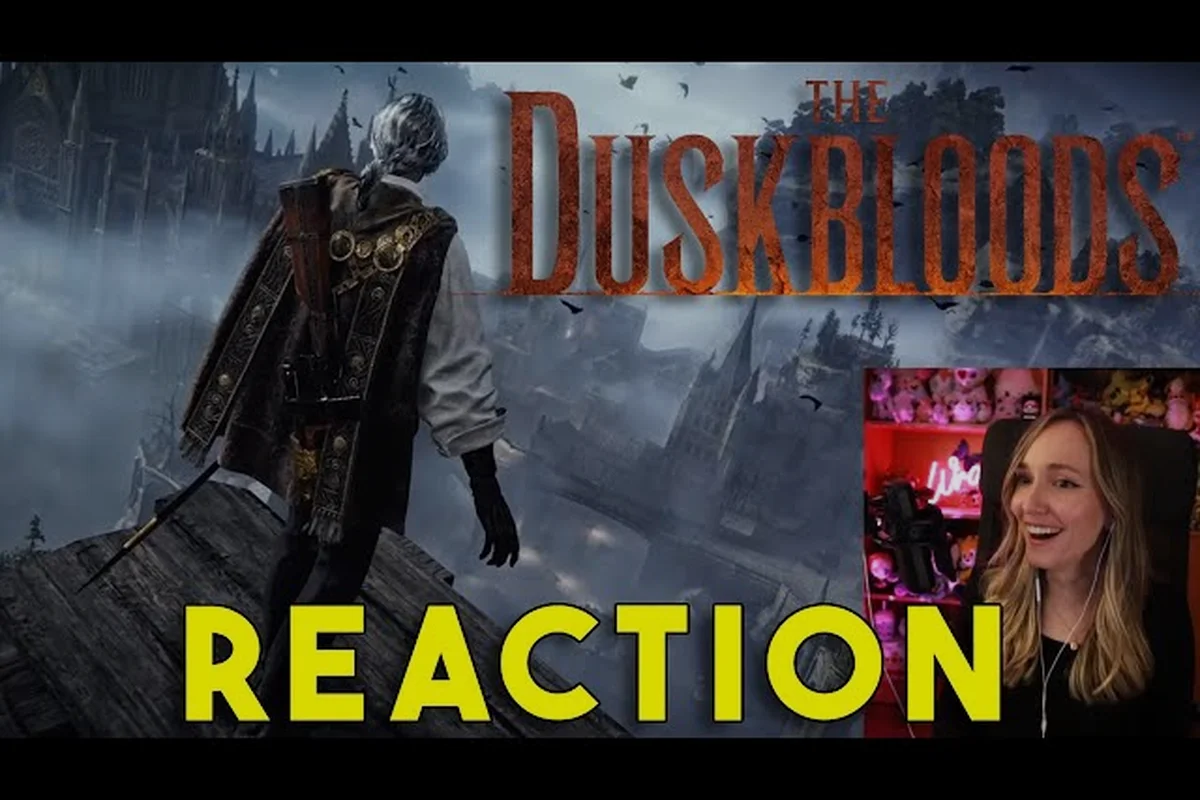
The Duskbloods online multiplayer is FromSoftware's boldest departure yet: an 8-player PvPvE arena where Bloodsworn hunters battle for the First Blood, not one another only. Every match's final objective converges on this prize, which means smart movement and tactical aggression define the Dusk Battle experience far more than simple gunplay. The official Nintendo listing confirms that this is a Nintendo Switch 2 exclusive built around simultaneous competition, and the network test data already suggests a community hungry for the format.
If you are wondering how the match structure differs from a typical free-for-all shooter, whether you need Nintendo Switch Online for The Duskbloods, or how PvE activity fits into the chaos, this guide breaks down the verified online systems with the latest information available as of August 2026. Let's get into what actually happens during those 8-player sessions.
The Duskbloods Up to 8 Players: How Dusk Battles Work
A standard Dusk Battle pits the Duskbloods up to 8 players in a single Victorian-gothic arena, all vying for Victory Points while a shared PvE layer adds NPC threats. This is not a round-based elimination ladder; it is a timed 8-player session where decisions about engagement, objectives, and risk tolerance decide the victor.
During each Dusk Battle, players can choose when to confront other Bloodsworn and when to farm Echoes (the in-match currency) from PvE foes. Because every elimination accelerates the 60-second countdown timer inherited from the Last Player Standing rule, aggressive players can artificially shorten matches while farmers exploit slower pacing.
The core flow of a Dusk Battle in The Duskbloods unfolds through a sequence of overlapping objectives rather than a single linear path. At match start, all eight Bloodsworn spawn across the gothic map, each pursuing personal goals like Destined Rivals or Destined Companion while scanning for the roaming Bloodsworn enemies that patrol set lanes. Victory Points accumulate through multiple channels: eliminating other players, landing the killing blow on a boss, or triggering dynamic events that shift the battlefield's focus. The match ends when one participant reaches the threshold by being the last alive or securing the most points, with the tagline 'The moontears will flow for one and one alone' underscoring the solitary triumph amid the chaos.
-
Victory Points: Earn points for killing enemy Bloodsworn, claiming First Blood, and successful dynamic event participation.
-
Elimination bonus: The player who dies first grants bonus Victory Points to the killer, which rarely makes early suicide-baiting worthwhile.
-
Match timer flex: The session shortens by one minute whenever a Bloodsworn dies, so each kill tightens the room for others to recover.
-
First Blood: Special dynamic events trigger after two minutes, spawning either a mini-boss or a Moontear cache that usually requires fighting other players to secure.
According to the official gameplay breakdown from the Nintendo store page, player focus remains split between opposing the roster of warriors you face and hunting down high-value PvE targets. That makes timing judgment as much an equipment skill as a mechanical one.
The PvPvE Structure That Keeps Matches Unpredictable
Unlike a pure battle royale, the PvE components in the Duskbloods lobby generate constant interaction whether you deliver the killing blade or not. The Bloodsworn enemies roam set lanes, giving positional information away to anyone paying attention, which means their presence acts as a live radar for ambushes and rotations. A player who tracks these AI patrols can predict where a rival will engage, then reposition using superhuman sprint or double jump to intercept. Conversely, ignoring them risks being caught in a three-way crossfire where the beast's attacks stagger you long enough for a human opponent to land the decisive shot. This design forces every participant to read the environment as actively as they read other players.
What sets the game apart is the fusion of FromSoftware's signature deliberate combat with the unpredictability of eight-player PvPvE, all wrapped in a Gothic Victorian aesthetic that spans different eras of a twilight humanity. Unlike typical battle royales where the circle dictates engagement, here the dynamic events and boss spawns create shifting focal points that reward both aggression and patience. The Bloodsworn's superhuman mobility—sprint, double jump, and super jump—turns verticality into a strategic resource, letting you escape or pursue across rooftops and train cars. Additionally, the personal goal system of Destined Rivals or Destined Companion adds a layer of psychological gameplay, as you may be compelled to hunt a specific foe or protect a chosen ally, which can override pure survival logic.
| Action | PvP Impact | PvE Benefit | Risk Level |
|---|---|---|---|
| Priority on First Blood spawn | High reward + bonuses | Moontear cache upgrades | High — attracts competing squads |
| Farming PvE vessels only | Hardly any player pressure | Steady Echo income | Low during early match |
| Territorial denial | Restricts competitor movement | None | Medium-High |
| Play for Last Player standing pull | Direct timer hit | No reward | Extreme late-game swing |
Players frequently ask is the Duskbloods a battle royale, and the answer is a firm no, because the victory conditions remain Victory Points rather than positional survival as the sole metric. A player who maintains positive score through PvE can win, even without executing a final elimination, which is where the PvE layer adds important strategic freedom.
Do You Need Nintendo Switch Online for The Duskbloods?
This is one of the largest stumbling blocks for new Switch 2 owners. Yes, you need Nintendo Switch Online for The Duskbloods, because absolutely every Dusk Battle happens over the network. There is no offline-only solo sandbox at launch, so even practicing against AI-controlled Bloodsworn enemies requires an active connection. The closed network test from August 21-24, 2026, already demonstrated this requirement, as all five sessions (each four hours long) were exclusively online. If you plan to play at launch in 2026, ensure your Switch 2 is linked to a Nintendo account with a valid NSO subscription before the first matchmaking attempt, otherwise you will be blocked at the title screen.
The The Duskbloods Switch Online requirements fall in line with Nintendo's premium multiplayer policy: a standard NSO membership is sufficient, although an Expansion Pack is optional and only unlocks cloud save backups if you lose console data. This means you do not need the pricier tier to access Dusk Battles, matchmaking, or the hub customization tied to Blood History and Blood Fate. The standard membership covers all online features, including the Worldwide and Nearby search filters. However, if you are the type who switches between multiple Switch 2 consoles or worries about hardware failure, the Expansion Pack's cloud saves become a practical addition, especially given the long-term progression tied to your Bloodsworn's customization rewards.
What changes if your membership lapses is immediate and total: you lose access to every online function, including matchmaking, the hub, and even the ability to view your Blood History or Blood Fate progression in a live session. The game will not let you enter a Dusk Battle queue, and any pending rewards from previous matches remain locked until you resubscribe. Since there is no offline solo mode, a lapsed subscription effectively freezes your entire play experience, leaving you with only the title screen and settings menu. This is a stark contrast to single-player FromSoftware titles, so budget for the recurring cost if you intend to maintain your Bloodsworn's journey through the Twilight of Humanity.
-
Online access stops entirely, which blocks the main mode, custom matches, and matchmaking.
-
Bloodsworn customization stays available in the Hub, but you cannot join a session to apply build choices.
-
Current Season events become invisible until the account is reactivated.
-
Progress tracking persists, since saves are stored locally and synced on next login.
If you were hoping to ignore a Nintendo Switch Online requirement, the official FromSoftware press release has no offline fallback clause, even for local play. The Switch 2's Wi-Fi stability is generally fine, but every player participating needs an active membership. For those wanting to experience the systems at no cost yet, the closed network test ran simultaneously with Switch 2 trial periods, according to community reporting on the network test guide, which offered a brief hands-on without purchase.
Network Setup and Expected Matchmaking Time
Before you jump into a queue, verify three things: your Switch 2 is connected to a stable network, your Nintendo Switch Online subscription is active, and you have completed the mandatory tutorial that introduces superhuman movement and basic firearm mechanics. The tutorial is brief but essential, as it teaches the sprint, double jump, and super jump chains that separate competent players from easy kills. Also, review your Blood Fate customization, because the choices you make there influence your starting loadout and personal goals for the first few matches. Finally, decide whether you want to prioritize low latency or faster session times by selecting Worldwide or Nearby in the search options, as this affects the skill band you will encounter.
| Connection Type | Expected Wait | Recommended Setup |
|---|---|---|
| Wired ethernet on Switch 2 dock | 15–30 sec | Enable NAT type A or B |
| Wi-Fi 5 GHz signal | 30–50 sec | Lower distance to router |
| 2.4 GHz Wi-Fi | 45–60+ sec | Use wired adapter when possible |
| Cross-region queue (optional flag) | 60+ sec | Expect packet loss risk |
The game offers "Worldwide" and "Nearby" search options, which provides players flexible prioritization between lower latency and quicker sessions. FromSoftware intended competitive multiplayer play parties to use nearby filtering for consistency, especially in high-skill match clusters. Nearby reduces ping spikes that can disrupt the precise timing of parries and dodges, which are critical in a game where a single stagger window decides a duel. Worldwide, by contrast, fills lobbies faster and exposes you to diverse playstyles from different regions, which is valuable for learning unconventional tactics. For ranked or tournament-style practice, stick to Nearby; for casual exploration of the meta, Worldwide offers a broader sample of the player base.
Duskbloods PvP Focus vs PvE Opportunities
The primary marketing calls The Duskbloods PvP focused, but that does not imply the PvE side is meaningless fill. In fact, certain victory paths rely on correct lure of the AI-controlled beasts rather than pure dueling focus. For example, a player who positions near a boss spawn can bait a rival into the creature's attack radius, then use the stagger window to land a clean headshot with their firearm. Alternatively, you can let a Bloodsworn enemy weaken a target before swooping in for the last hit, securing both the elimination and the associated Victory Points. This interplay means that even a less skilled duelist can win by mastering environmental manipulation, turning the PvE elements into a tactical equalizer.
That said, the reward loop centers largely on the player encounters for getting the most Echoes — a common pattern shared by many competitive multiplayer shooters. Observable behavior from the June 2026 trailer showed players positioning for angles between each other while a monstrous creature wandered a central choke.
Duskbloods battle progression forms from three trajectories: survival, objective control, and elimination. Survival rewards you for being the last Bloodsworn standing, which encourages defensive play and strategic retreats. Objective control focuses on dynamic events and boss kills, where you must contest a specific point or land the final blow on a powerful AI enemy. Elimination is the pure PvP path, where each player kill grants Victory Points, with bonus points for defeating your Destined Rival. Most matches blend these trajectories, as you cannot ignore the boss spawns if you want a competitive score, but you also cannot win by hiding alone. The key is adapting your approach based on the current point distribution and the behavior of other players.
-
Hunters who deploy primarily to eliminate competing Bloodsworn fast often trigger earlier timers and then pressure the remaining players with map knowledge advantages.
-
Collectors stay mobile, gathering PvE rewards until the final minutes; they usually secure Moontear shards in quiet sections and only engage to defend objectives or deny the decisive lead.
-
Opportunists chase First Blood dynamic events and pick fights around them, keeping flexible loadouts that adapt between gunfire and special abilities.
A mix of all three often wins matches, because the Victory Point thresholds differ. Score-only endgames let a dedicated collector win by 200 points while eliminating nobody, but eliminations increase per-kill multiplier on the victory point pool. Therefore a Duskbloods PvE guide that claims farming alone constitutes a viable path is partially correct, provided you translate moontear upgrades back to aggression.
If you'd rather focus on single-format preparation, the Duskbloods online battles guide offers a breakdown covering lobby setup, loadout choices, and map-specific play calling. That guide dives deeper into how to configure your Blood Fate for aggressive versus defensive styles, and it maps out the train level's chokepoints and rooftop routes. It also explains how to read the early-game spawn patterns of Bloodsworn enemies to predict where the first major clash will occur. For players who want to master one approach before experimenting with others, that resource provides a structured path from first match to advanced tactics.
Friendly Fire and Co-op Realities of The Duskbloods Online Multiplayer
There is no friendly fire between players on the same designated companion system — the Destined Companion option lets you queue in as a duo against the other six. This makes can you play the Duskbloods with friends better answered than what its predecessor Bloodborne ever suggested.
The companion has its own Victory Point reward curve: protecting your Destined Companion grants a steady trickle of points throughout the match, while ensuring they survive to the final phase yields a substantial bonus. This creates a symbiotic relationship where both players benefit from mutual defense, but it also makes you a target for enemies who see an easy two-for-one elimination. The companion system does not force cooperation—you can abandon them for a higher score, but the risk is losing the passive income and the end-game bonus. Balancing this trade-off is a core strategic decision, especially in matches where the boss spawns far from your companion's position.
-
Duo queuing requires team channels enabled and provides no kill-distance-sharing as the partner receives half of the elimination bonus.
-
The Destined Rival option functions as an anti-ally identity, assigning you a particular player on the opposing team to hunt for bonus gains.
-
Co-op parties of two cannot exceed that number, as confirmed by the network test files, despite rumor about larger squad queues.
That "play with friends" appetite remains central for The Duskbloods multiplayer as a social activity idea, so knowing entry details matters. The full party system walkthrough covers squads extensively, including how to form a party before matchmaking and how the game handles Destined Companion assignments within a group. It also explains the matchmaking rules for parties, such as whether you can queue with more than two players and how the game balances team sizes against solo players. For Switch 2 owners planning regular group sessions, that guide is the definitive resource for avoiding common party setup mistakes.
Tactical Online Strategy for Higher Win Consistency
The final online layer works less like a close-quarter arena and more like a geometric positioning mini-war. Because combat damage in PvP often erases 40% of a life bar in one hit, maintaining battlefield autonomy has as much value as pure offensive skill.
Test your approach against these table values while reading official data and observable meta-speculation from Dark Souls analysis traditions: the stagger window from a firearm hit on a charging melee specialist is approximately 0.8 seconds, enough for a full combo or a reposition. Superhuman sprint covers about 12 meters in 1.5 seconds, while a double jump adds 4 meters of vertical clearance, and a super jump can clear a two-story building. Boss spawns occur at fixed intervals of roughly 90 seconds after the previous one is defeated, but dynamic events can trigger earlier based on player proximity. These numbers are preliminary and community-sourced, so treat them as heuristics rather than gospel, but they provide a baseline for planning your rotations and engagements.
| Real-Time Decision | Optimal PvP Play | Best PvE Play | Why Top Players Choose Different Paths |
|---|---|---|---|
| Early Game (0–3 min) | Mark strongest duelist and rotate | Claim quick AI pockets | Chip time early to reduce surprises |
| First Blood wave | Set ambush near cache point | Use AI spawn awareness | First Blood usually doubles next gain |
| Middle minute 5 | Push disputed chokepoints | Farm high-risk lane near timer | Holding mid denies 40 potential points |
| Final 60 seconds | Protect score vs kills | Delay engagements | Last single kill can shift a loss into narrow win |
Beyond choice logic, several mechanics every advanced player should master include Superhuman Sprint, Double Jump chain, and super jump sequencing used to reposition into corridors. Within close combat, using a firearm toward charging melee specialists triggers heavier stagger windows, which can interrupt their attack animation and open them to a critical hit. The sprint's acceleration is not instant, so you must time it to avoid being caught mid-windup, while the double jump can be chained into a super jump for unexpected vertical escapes. Practice these in the tutorial until they become muscle memory, because in a Dusk Battle, a half-second hesitation in your movement chain can mean the difference between landing a killing blow and being eliminated.
Then observe behavior: if one Bloodsworn makes a hurried play to grab First Blood, other experienced players regularly bait that attempt with visibility exposure. At that point game identity often reveals itself — that is this game's version of the psychological read.
Sticking to a dedicated matchup filter also reduces the shock of changing skill bands, because FromSoftware titles traditionally elevate player skill super-geometrically. The in-depth beginner guides within our network already place online behavior variables several matches after practice, noting that the first ten matches are often brutal as you learn to read opponent patterns. Using Nearby consistently keeps you in a regional skill pool that gradually improves with you, rather than throwing you into worldwide lobbies with veterans who have mastered every stagger frame. For new Switch 2 owners, this filter is the single most effective tool for smoothing the learning curve and avoiding frustration in the early hours.
Game Length Constraints and When a Round Ends
Most Dusk Battles end between 6 and 9 minutes, although a 10-minute cap prevents gridlocks. That creates The Duskbloods matchmaking time concern: players rarely want to wait a third of the match in queues. The match lengths are short enough to make even loss streaks feel like continuous reps, which is excellent for someone who arrives searching for the Duskbloods PvP-focused pitch.
For sessions that reach the bell without maximum score, the ranking system uses margin of victory as one tiebreaker before "player with the earliest first elimination" receives the next placement. This particular official choice tells players chasing ranking ladder to engage early fights at least once per match, even if they play more extract-style later — consistent with raw data gleaned from the network testing session and game design interviews, which community members discussed across feedback forms.
Frequently Asked Questions
How many players can join an online Dusk Battle?
The Duskbloods up to 8 players are supported in a single standard match. Pairs can join together through the Destined Companion system, and the remaining six slots fill via public matchmaking. Solo play is automatically accommodated, with the matching algorithm balancing parties against groups of similar assignment and skill rating.
Is this a battle royale?
No, the Duskbloods isn’t a battle royale. Matches cap around ten minutes, with victory decided by Victory Points, not last-player-standing. The Last Player Standing bonus only adds score and shortens the timer when time expires—it’s a scoring edge, not a win condition tied to map positioning.
Can I play with friends?
Yes, two-player co-op exists through the Destined Companion invite option. Larger friend groups cannot join as a single squad, though the game permits everyone to search the same queue region if they synchronize starting time. Voice chat remains optional via the Nintendo Switch 2 app or system-level party functions.
What is the Nintendo Switch Online requirement?
Do you need Nintendo Switch Online for The Duskbloods has a straightforward answer: yes, because there is no offline single player offering content. Every profile entering a match requires the base NSO membership. The Expansion Pass is optional unless cloud backups for this title matter to you.
Does the PvE reduce the PvP focus?
The Duskbloods PvP-focused identity stays intact—NPC spawns are timed resources, not alternatives to combat. Overcommit on a Moontear and a rival Bloodsworn punishes you instantly. Guard these corridors to deny farm, not replace duels. Will you hunt or ambush? Drop your strategy below.